The Kale in Kalevala

Eats, Finnish-ness, Heart + Soul, Organic + Local

Almost every Wednesday I travel by tram to my organic food co-op, from which in the late summer into this darkening November I was able to get beautiful Finnish kale, both the typical bright green curly kind, but also silky dark green Lacinato kale. Almost every time, a Finnish person asked me “What do you do with that? How do you eat it?”. This happens to me at normal markets, too, about Lacinato kale especially. “What is that? How do you eat it?” And I answer passionately as best I can in my bad and broken Finnish.

Here is why this is so strange, once one starts digging deeper. Up until the middle ages, kale was likely the green that people ate most in Europe. While it is exactly the same species as our quotidian cabbage (as are broccoli, cauliflower, brussels sprouts…), kale, and collard greens (and the delicious spring greens that can be found in Britain) are closer to the wild forms of that nourishing vegetable.

You may start to wonder, given that they are all cultivars of the same species, whether there is anything special about Kale. I’m not the first to be skeptical. However, it seems to actually hold up to scrutiny. A comparison using USDA data shows raw kale to have significantly more vitamins A and K than raw savoy cabbage. Perhaps this is because it is closer to the wild form, not bred to last long on the shelf.

In Finland, the lack of acquaintance with kale is all the more curious, given that it rests at the root of the Finnish term for all Brassica oleracea. Observe for example:

FinnishLiteral TranslationEnglish

Kukkakaali Flower cabbage Cauliflower
Parsakaali Asparagus cabbage Broccoli
Ruusukaali Rose cabbage Brussels sprouts
Lehtikaali Leaf cabbage Kale
Mustakaali Black cabbage Lacinato (dino) Kale*
Kaali Cabbage
*Also known as Tuscan kale. Interestingly, I recently realized that it’s Italian name, Cavolo nero , is identical to the Finnish: black cabbage.

It is neat that in Finnish, these cultivars are named in a way that acknowledges their close relation to each other, something that is obscured in English. And it can be no coincidence that KAALI is so close to KALE . Perhaps it is a forgotten echo of when the the Brassicaceae found it most pots would be something quite different from the pale heads of stiff cabbage most common in stores today. Something foraged and wild. Something closer to kale.

Whatever the cultural, environmental or economic forces, kales were forgotten, although they grow well in this climate, and are even made tastier with a little bight of cold. Now their comeback is tinged with the annoyance of their trendiness. A signifier of a certain lifestyle. An annoying one.

Really, kale is old, old news–part of the unglamorous past of Northern European cuisine. In the south of Sweden, kale is part of a traditional Christmas dish, called långkål , a tradition that allegedly is particularly strong in the free Hanseatic state of Bremen, which resonates with me for familial reasons…

Anyway, långkål involves, kale, butter and cream and I will be inflicting it upon my family this yule. But before that, I wish all four of my readers, who are very dear to me, and from whom I will be separated this Thanksgiving, the best of all days on Thursday and feasts if you have them, filled with love.

Postscript

Yes. I just wrote a long long post about KALE. I didn’t want to; it compelled me. It began when a friend noted that perhaps there was a hidden meaning in Kalevala. It started showing up in fine art:
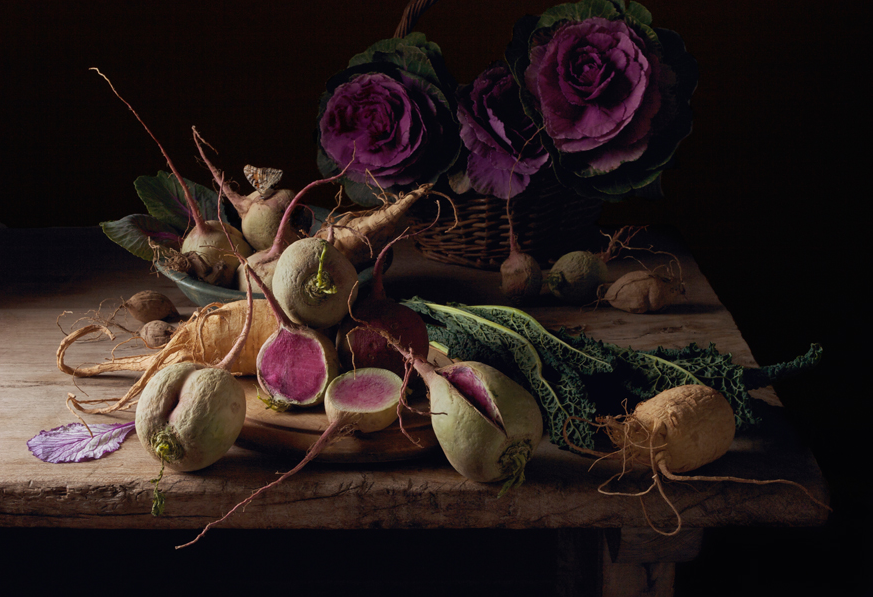
A still life of vegetables including kale, by Paulette Tavormina

This by Paulette Tavormina via Glutton for Life

And then this came in the post.
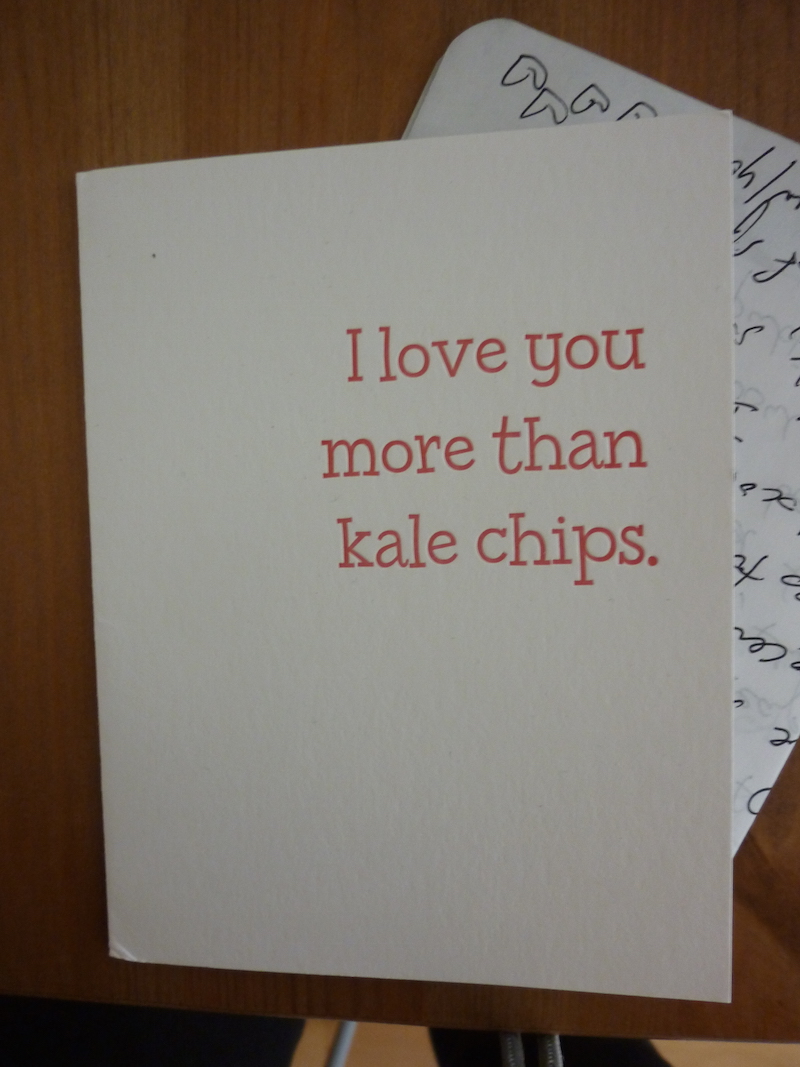
"I love you more than kale chips."

I began to see it everywhere.

I heard about a new form of kale, kalettes, that was created by a liason with my other favorite cabbage, brussels sprouts.

And then last week I FOUND SOME KALE EVEN IN THE MIDDLE OF THE FOREST.
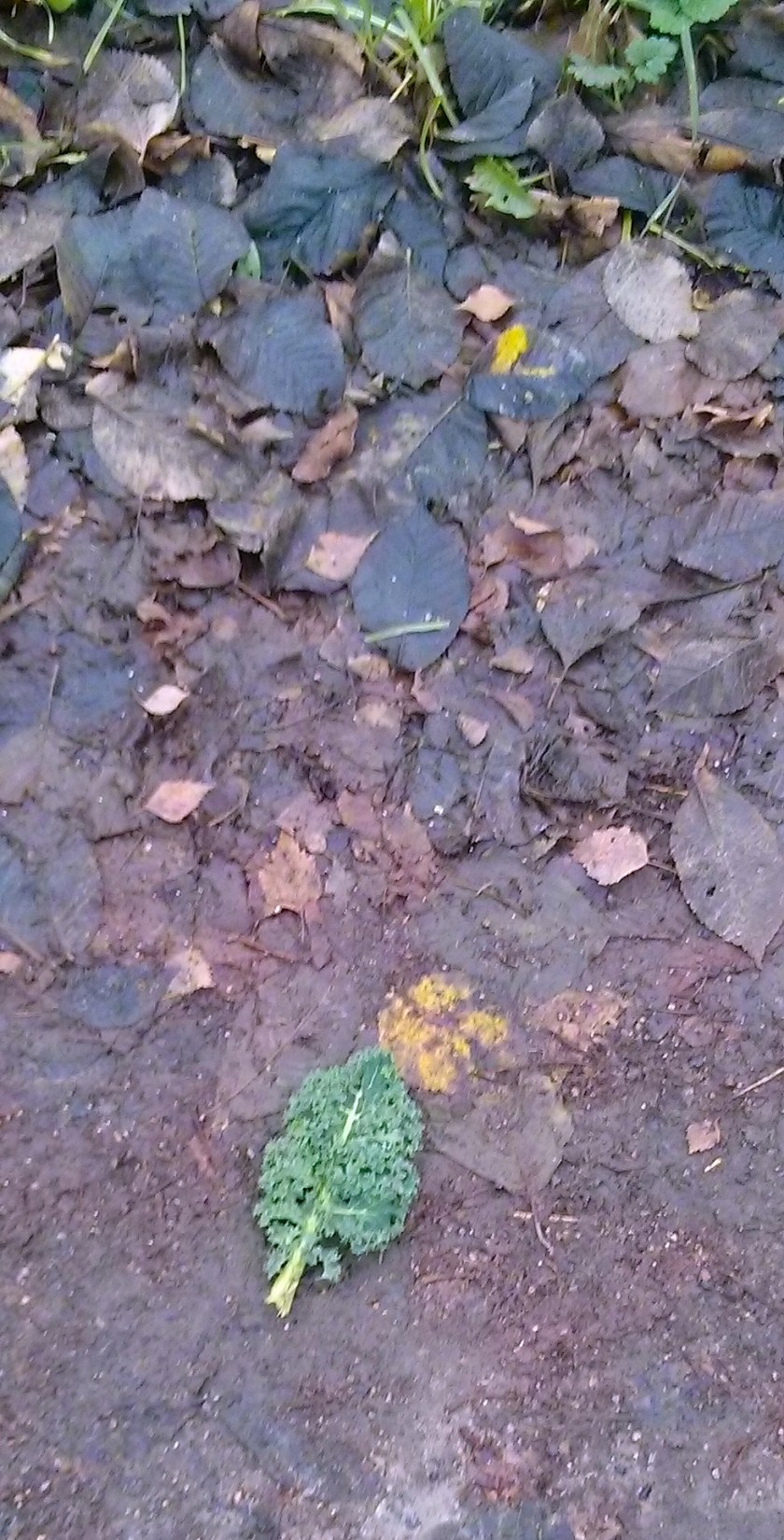
2014.11 Found Kale

Kale, in the middle of woods near Munkkiniemi

Maybe now it will now let me rest. This is dedicated to L who discovered the title of this post, and whose magic set this in motion and M & Y who were once brave enough to come to a kale party, and R for the kale chips, quickly devoured, and P for making and sharing the first, delicious and beautiful, raw kale salad I had ever had.
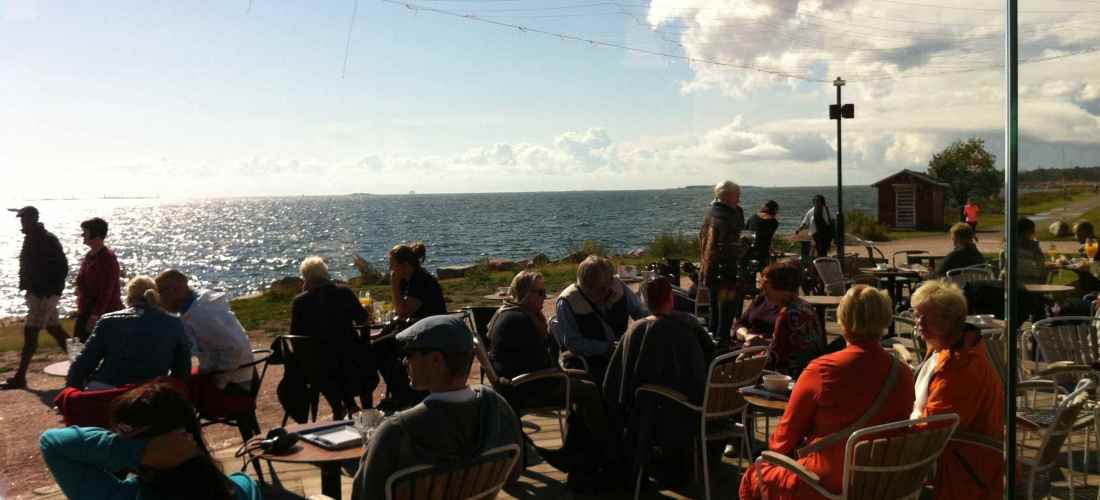
The terrace of Cafe Birgitta, Helsinki

Exquisite September, Beguiling Birgitta

Eats, Helsinki, Nature, Restaurants + Cafes

If you are in Helsinki, you should be outside right now. The weather is painfully beautiful. The temperature perfect, the light mellow and golden. The days are at a humane length. It is a Goldilocks moment before the bears of winter return.

This month is also the last call for Cafe Birgitta, which will purportedly close for the winter at the end of September. The terrace looks out over one of my favorite swimming spots, but the inside is equally beautiful. Really, they could be serving anything, the setting is so perfect, and the fact they are actually offering interesting, well-presented food (towering burgers, chia seed parfaits, tempeh salads) explains the growing crowds that encompass everyone from what look to be exquisitely dressed business people to joggers in disreputable footwear who appear to have been seduced into taking a respite from their seaside rambles.

But it is the placement and construction of this summer cafe that is most wonderful; it creates a little sanctuary in a spot on the border of an old industrial area with one of the best and most open views of the water available in Helsinki. The building itself was constructed with oiled timber, reminiscent of old piers and lights inside are made from old fashioned glass buoys. A beach shack with a wood stove in modern Scandinavian design: just enough protection and warmth to shield from approaching autumn. The spot inspired this lament for the end of summer:

A low fire lips its iron cage
August hails the end of summer
Sun bounces back from shining waves
The Earth is flush from lengthened days
The city turns towards winter.

Rushing autumn now bundles limbs
once warmed by fleeting summer.
Shaking sand, bodies rise again
and fold themselves in shells
of wood and metal.

Footnote: Just noticed that in the picture above of pastries and korvapuusti (those delicious chewy not gooey cinnamon rolls spiked with cardamom) the words Honolulu and Valhalla are juxtaposed in a single frame. This seems a rare event… Yet, there is a strange consonant resonance between the two place names, pointing to something fantastical!

Nils Dardel at Moderna Museet

Art Design Music, Eats, Restaurants + Cafes, Stockholm, Travel

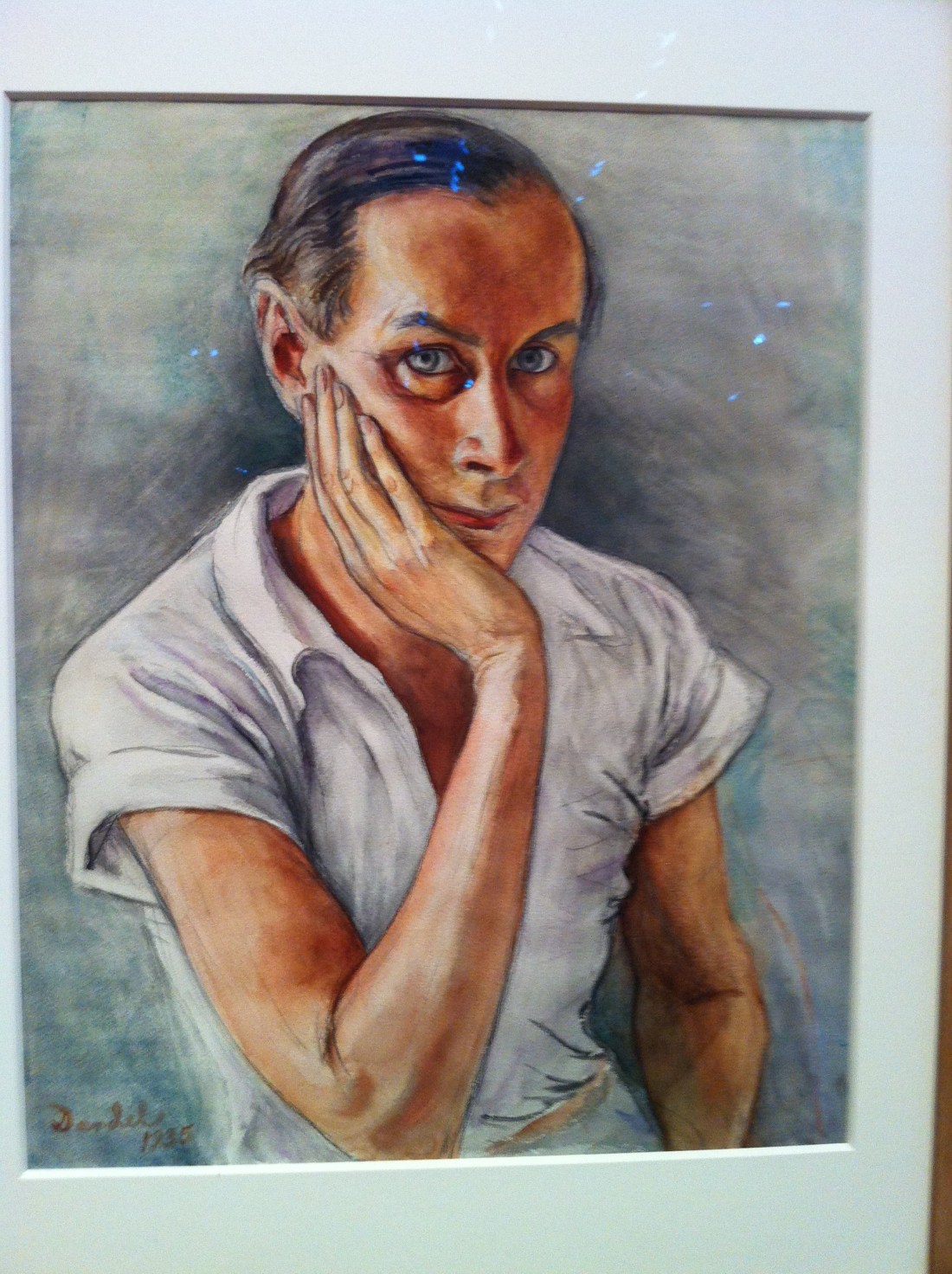
Nils Dardel, Self Portrait 1935

Another great thing about Helsinki is that it is possible to walk from here to Stockholm, by simply hopping on one of the ridiculous ferries that run daily between the two cities. I went to have a look at two exhibitions at Moderna Museet. The first that caught my eye was about Surrealism and Duchamp, of the Fountain (i.e. urinal) fame, which was frankly a bit yawn, although there were some interesting pieces by a variety of artists, including one that was an umbrella composed of now decaying sea sponges.

What blew me away was the bigger exhibit,Nils Dardel and the Modern Age . Dardel’s work was vaguely familiar to me, but they did a magnificent job of showing the breadth of it, beyond his brightly colored, semi-macabre early oil paintings.

His work is confusing and striking even today. I was particularly taken with the evolution of his self portraits. His costume and stage sets evoked an almost Lord of the Rings imagery, and his combination of almost flippant scenes with bright coloring and motifs of death and decay was unsettling. As were his paintings of the exotic and primitive. Some of his most engaging, I felt that they should not be consumed with out reading something like this book , or thinking about the work of Coco Fusco in preparation.

Since the exhibit then I have been thinking about The Heart of Darkness , particularly how it begins with the memory of Romans sailing into Britain and viewing it as a savage land of primitive people. The wild savage past of Sweden is even more recent, so these images of the savage were particular ridiculous. But perhaps they were meant to be. Some of them were also incredibly beautiful. The details and colors in particular reminded me sometime Helsinki + Berlin based artist Sari Bremer , particularly her 2011 work Into the Wilderness .

Speaking of savage eaters of raw flesh, I did not do such a great job of picking a lunch destination. Despite good reviews and a super-cute website, I found Pocket (part of the Pontus Frithiof Empire
a wee bit of a disappointment. The place was adorable, and open to the street offered a charming respite from a hot sunny day. The fresh pasta and new peas slathered in butter, was, accordingly, delicious.

However, the tuna sandwich turned out to be a large raw steak of tuna in a hamburger bun. While no stranger to eating raw fish, this seemed questionable. Do Swedes really know that they are doing with raw tuna shipped from foreign (exotic and likely tropical!!!) seas? These are people who invented processes like preparing old fish by soaking it in lye. I wasn’t convinced, although I ate it anyway. It was bit hard to chew. Whatever parasites I acquired seem to be blending in fairly well, I am happy to report.

It is good to try new things, but maybe I should just submit to my obsession with this place, which has never failed me. My goal next time, however, is to visit the Saltå Kvarn store. I’m sorry, but they have the best knäckebröd. While I would never have purchased it to begin with, since the idea of fancy knäcke seems a bit cross purposes, once I tasted their rye crisp bread, which is stone ground by hand from whole rye kernels, using stones carefully chosen from pristine forests by happy, fully health-insured Tomte*. There was no going back.

Åh Sverige!

The Nils Dardel exhibit is on until 15 September 2014; definitely worth a visit.

*Or by some similar process. Certainly, organic fields seem to be involved.